小程序项目
skynet,lua
背景
事件管理器用于触发特定场景下需要执行的逻辑。
使用了观察者模式,注册时传入事件名、对象和回调,触发事件的时候就能根据事件名找到回调执行。
使用事件管理器的话:
- 多个模块都可以注册一个同名事件,一次触发就能执行多个事件
一个简单的事件管理类
 1
 2
 3
 4
 5
 6
 7
 8
 9
10
11
12
13
14
15
16
17
18
19
20
21
22
23
24
25
26
27
28
29
30
31
32
33
34
35
36
37
38
39
40
41
42
43
44
45
46
47
| -- constructor
function EventMgr:ctor()
self._eventList = {}
end
---监听事件
---@param obj any
---@param event string
---@param func string
function EventMgr:observe(obj, event, func)
local obsList = self._eventList[event] or {}
table.insert(obsList, { obj = obj, func = func })
self._eventList[event] = obsList
end
---取消事件
---@param obj any
---@param event string
function EventMgr:cancel(event, obj, func)
local obsList = self._eventList[event]
if not obsList then
return
end
for _, v in pairs(obsList) do
if v.obj == obj and v.func == func then
table.remove(obsList, i)
end
end
end
---触发
---@param event string
---@param ... any[]
function EventMgr:trigger(event, ...)
local obsList = self._eventList[event]
if not obsList then
return
end
skynet.fork(function()
for i, v in ipairs(obsList) do
local ok, ret = pcall(v.obj[v.func], v.obj, ...)
if not ok then
print("error")
end
end
end)
end
|
旧版实现
思路
当触发事件的时候,为所有注册了同名事件的对象都fork一个协程去执行
问题
引用skynet.fork源码
 1
 2
 3
 4
 5
 6
 7
 8
 9
10
11
12
13
14
15
16
17
18
19
20
21
22
23
24
25
26
27
28
| local function co_create(f)
-- 从协程池中获取一个协程
local co = tremove(coroutine_pool)
if co == nil then
co = coroutine_create(function(...)
-- 执行逻辑
f(...)
while true do
local session = session_coroutine_id[co]
-- 执行逻辑
-- do sth
-- recycle co into pool
f = nil
-- 协程执行完后再放回协程池
coroutine_pool[#coroutine_pool+1] = co
-- recv new main function f
-- do sth
end
end)
else
-- pass the main function f to coroutine, and restore running thread
-- do sth
end
return co
end
|
假设当前事件的回调函数特别多的时候,这时候如果协程池coroutine_pool里的协程数不足,则会创建协程coroutine_create。
为每个事件都创建一个协程,协程执行完之后协程不会自动释放,而是会放回协程池coroutine_pool[#coroutine_pool+1] = co,那么内存就会一直占用。
执行流程

优化实现
思路
要优化需要先知道协程的特性:同一时间只能由一个协程在运行
 1
 2
 3
 4
 5
 6
 7
 8
 9
10
11
12
13
14
15
16
17
18
19
20
21
22
23
24
25
26
27
28
29
30
31
32
33
34
35
36
37
38
39
| -- constructor
function EventMgr:ctor()
self._eventList = {}
self._eventQueue = {}
self._count = 0
end
function EventMgr:consumeEvent()
if not next(self._eventQueue) then
return
end
skynet.fork(self.consumeEvent, self)
self._count = self._count + 1
local task = table.remove(self._eventQueue, 1);
for _, v in pairs(self._eventList[task.event]) do
local ok, ret = pcall(v.obj[v.func], v.obj, table.unpack(task.args))
if not ok then
print("error")
end
end
end
---触发
---@param event string
---@param ... any[]
function EventMgr:trigger(event, ...)
local obsList = self._eventList[event]
if not obsList then
return
end
table.insert(self._eventQueue, { event = event, args = table.pack(...) })
if self._count <= 0 then
skynet.fork(self.consumeEvent, self)
end
end
|
解决问题
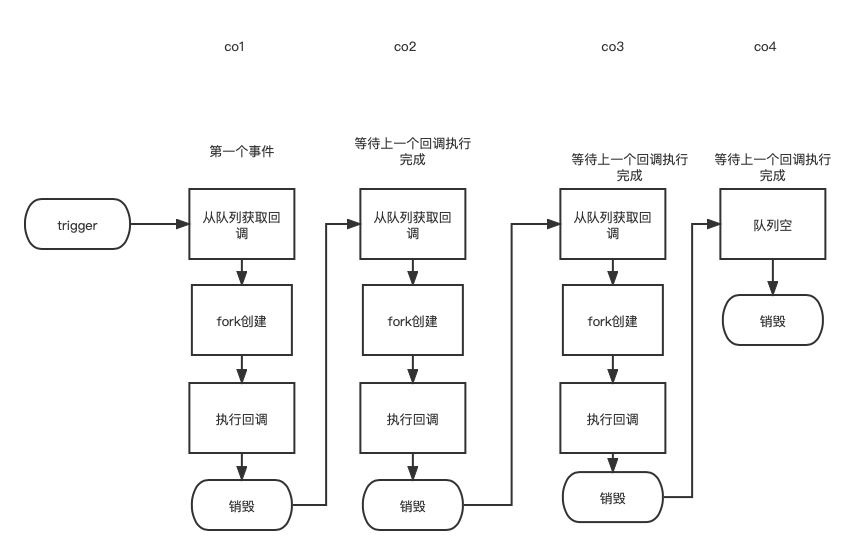
- 为第一个回调创建一个协程执行,同时创建下一个协程,执行回调
- 当第一个回调执行完,销毁协程,切换到下一个协程。下一个协程创建新的协程,执行回调
这样最优情况下只存在两个协程,最坏情况下存在n个
执行流程